
Call Us Mon - Sun 9am - 5pm 0330 043 4643
Call Us Mon - Sun 9am - 5pm 0330 043 4643
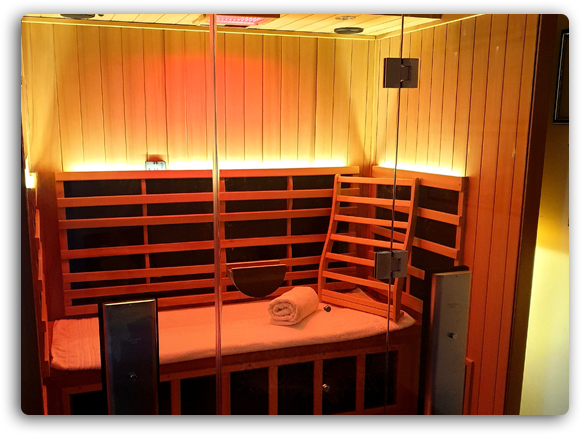
Ever fantasised about sweating off pounds while lounging? Can infrared saunas help you lose weight? Short answer: they might help a little, alongside diet and exercise — but the picture is more nuanced than it's often made out to be.
Dive in to discover how sweating, calorie burning, and detoxification can work together to help you feel lighter and healthier — and where the evidence is stronger or weaker.

Infrared saunas work their magic by using panels that penetrate human tissue, heating you from the inside out. This technique promotes a deep sweat and a more intense detox than the usual sweatbox.
To put that heat in perspective: a traditional Finnish sauna typically runs at around 70–90°C (158–195°F), sometimes hotter, heating the air around you so intensely that your body has to work hard just to tolerate the room. Infrared saunas take a different approach — the panels themselves might feel warm to the touch, but the air temperature usually sits much lower, around 40–60°C (104–140°F). Rather than relying on scorching air to make you sweat, infrared wavelengths are absorbed directly by your skin and the tissue just beneath it, which is why many people find infrared sessions more tolerable for longer stretches even though the room itself feels noticeably cooler than a traditional sauna. This lower ambient temperature is also part of why the more dramatic infrared calorie-burn claims floating around online don’t line up especially well with traditional-sauna research — less ambient heat generally means less cardiovascular strain, all else being equal, even if the deep tissue penetration still produces a solid sweat.
Can an infrared sauna help you shed pounds? The honest answer is that the calorie-burn figures you'll often see quoted online — sometimes "up to 600 calories in 30 minutes" — mostly trace back to sauna manufacturer testing and small, un-peer-reviewed studies rather than robust clinical research, so treat them as illustrative rather than guaranteed. What is well established is that your body works to cool itself down in the heat, which does raise your heart rate and calorie expenditure somewhat — more comparable to a brisk walk than an intense workout.
For a sense of what’s actually been measured under lab conditions: a 2019 study published in BioMed Research International (Podstawski et al.) had young, sedentary, overweight men sit through four 10-minute bouts in a traditional (not infrared) dry Finnish sauna, with short cooling breaks between each bout. Across the full 40 minutes, energy expenditure averaged around 333 calories — broadly in the same ballpark as a brisk 30–40 minute walk. It’s worth being clear about what this figure does and doesn’t tell you: it’s traditional-sauna data, gathered from a specific, small group of participants, and infrared saunas run at noticeably lower air temperatures, so this exact study hasn’t been repeated for infrared cabins. Treat it as a useful reference point for how heat exposure compares to light exercise in general, not as a guaranteed infrared-sauna number. Either way, it reinforces the same message as the rest of this article: sauna heat can nudge your calorie expenditure and heart rate in the right direction, but it works best as a complement to — not a replacement for — actual exercise.
The heat from these saunas can kick your metabolism into high gear. This means you might keep burning calories even after you've left the sauna. It's a bit like having an afterburn effect from a workout.
This ‘afterburn’ idea has a real name in exercise science: excess post-exercise oxygen consumption, or EPOC. After a bout of exertion, your body needs extra oxygen to restore itself to its resting state — replenishing energy stores, clearing metabolic by-products, and cooling back down — and that recovery process itself burns calories, sometimes for hours afterwards. Heat exposure places some overlapping demands on the body: your heart works harder, you sweat, and your system has to work to cool itself and rebalance fluids once you step out. Whether infrared sauna use produces a meaningful EPOC-style effect of its own hasn’t been well studied — most EPOC research is built around actual exercise, not passive heat exposure — so it’s honest to say the underlying concept is real and well established, but the size of any afterburn from a sauna session specifically is still an open question rather than a settled number. In practice, that means it’s sensible to treat any post-sauna calorie burn as a small bonus on top of a healthy lifestyle, rather than something to plan your weight-loss maths around.
Sweating does expel water, salt, and trace amounts of minerals, but there's limited scientific evidence that it meaningfully removes toxins or heavy metals from the body — that job is largely handled by your liver and kidneys. What sauna use reliably does is shed water weight temporarily, which can leave you feeling less bloated even though it isn't fat loss.
The heat ramps up your heart rate, mimicking some of the cardiovascular response of moderate exercise — though it's not a substitute for it.
Sure, losing water weight isn't a permanent fix, but it does help you feel less bloated and lighter on your feet.
It’s worth understanding why. Sweating heavily in a sauna causes your body to lose fluid — plus small amounts of sodium and other electrolytes — through your skin, and fluid is heavy: a litre of sweat weighs roughly a kilogram. So if the scale shows you’re a pound or two lighter straight after a session, that’s essentially water leaving your body, not fat being burned. Fat loss requires a sustained calorie deficit over time; water loss just requires sweating. The good news — or bad news, depending on what you were hoping to see on the scale — is that this water weight comes back quickly. As soon as you rehydrate, which you should do for safety as much as anything else, your body replaces those fluids, typically within a few hours to a day of normal eating and drinking. Exactly how much you lose varies a lot by individual, session length, and how hydrated you started out, which is part of why sauna-based ‘before and after’ weigh-ins are such an unreliable way to judge progress. That’s also why sauna use shouldn’t be relied on as a way to hit a number on the scale before a weigh-in or an event — the drop is real, but it’s temporary by design.
Better blood flow supports muscle recovery and general cardiovascular health, which can make it easier to stay consistent with exercise — an indirect but genuine benefit for weight management.

For best results, aim for 3-4 sessions a week. Start with short sessions of 20 minutes and gradually build up to 45 minutes. Listen to your body and adjust as needed.
Team up your sauna sessions with regular workouts to amplify results. It helps with recovery, so you're less sore and more likely to stick to your routine. Combine this with a balanced diet to really see the benefits.
Infrared saunas can help lower stress and reduce cortisol levels. Since chronically high cortisol is linked to increased abdominal fat storage, keeping stress in check may indirectly support a healthier body composition over time — though a sauna session on its own won't target belly fat specifically.
The soothing heat relaxes muscles and eases pain, making it perfect after a tough workout.
Increased blood flow promotes collagen production, leading to clearer skin and a youthful glow.
Sauna use isn't right for everyone. Speak to your doctor before using an infrared sauna if you're pregnant, have multiple sclerosis, have a heart condition, or have uncontrolled high or low blood pressure — heat exposure can affect all of these.
Stay hydrated, start with shorter sessions, and always listen to your body. If you feel dizzy or unwell, it's time to step out.
Infrared saunas are a genuinely useful addition to a weight-management routine — mainly through modest extra calorie expenditure, temporary water-weight loss, and supporting recovery so you can train consistently — but they're not a magic fix, and some of the bigger calorie-burn and detox claims you'll see online are overstated. Pair them with exercise and a healthy diet for the best results.